From Parish to Port: How Your Ancestors Reached Hamburg or Bremen
Published by Gunar Bodendiek. Last updated on March 13, 2026.
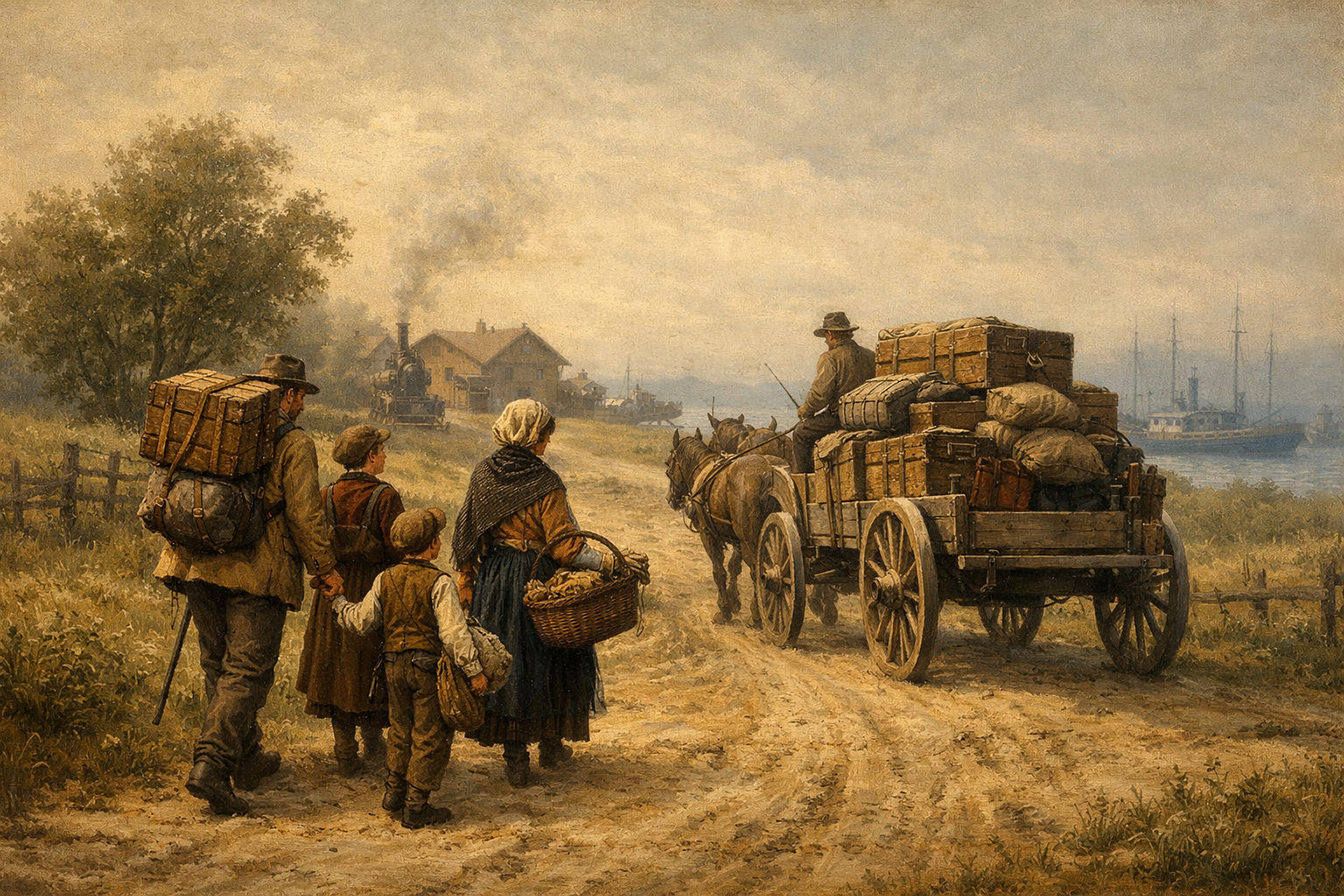
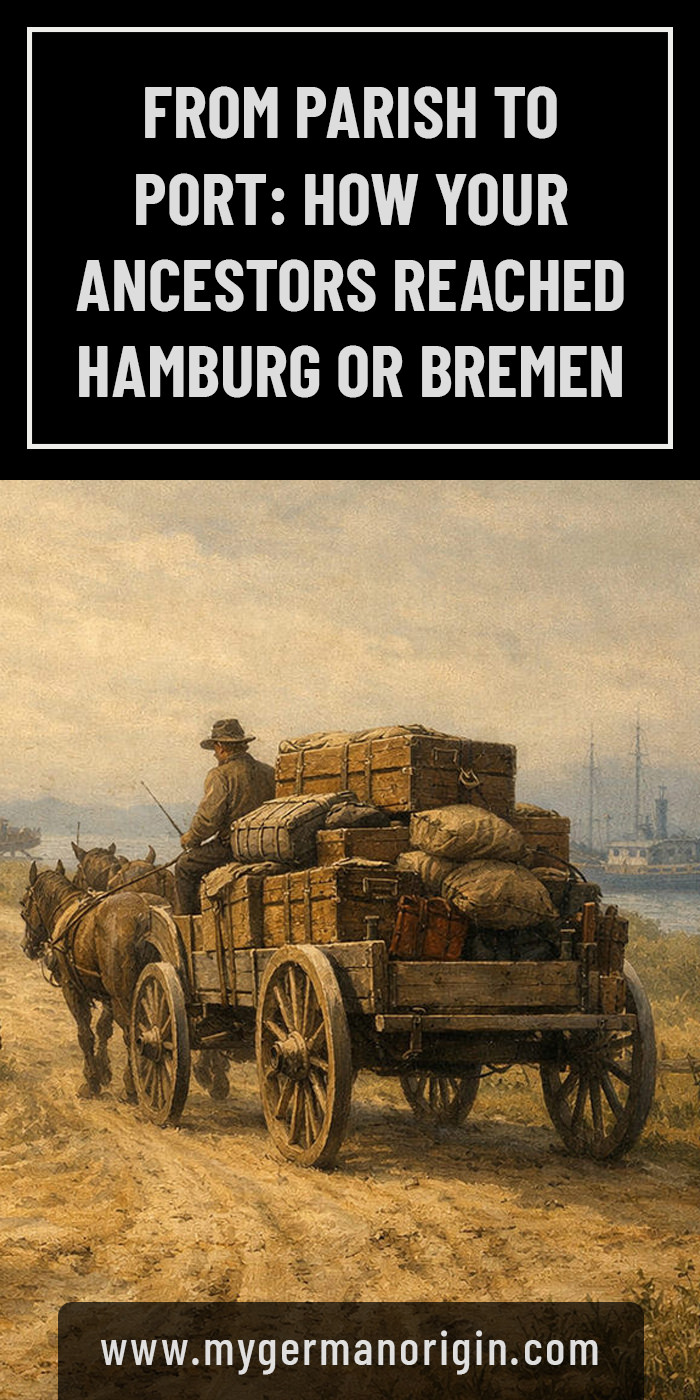
When German emigrants left for North America in the 19th century, the journey did not begin on the deck of a steamship. It began in a small village, often hundreds of miles from the coast. Before reaching ports like Hamburg or Bremen, emigrants traveled by foot, wagon, riverboat, and later by railway. Understanding this journey helps bring your ancestors’ migration story to life — and it can also reveal valuable clues for genealogical research.
1. The First Step: Leaving the Village
For many emigrants, the journey started in a rural parish. Families often sold belongings, settled debts, and obtained permission from local authorities before departing. In some regions, especially in Prussia, emigrants had to request official approval to leave the country (Auswanderungserlaubnis). These permissions were sometimes recorded in municipal or regional archives.
The departure itself could be emotional and uncertain. Villagers gathered to say farewell, knowing that the emigrants might never return. For genealogists today, these final preparations occasionally appear in records such as:
- Emigration permits (Auswanderungsakten)
- Local police registrations
- Church notes mentioning families leaving “nach Amerika”
- Property sales or inheritance transfers
2. Traveling Across Germany
Reaching the great North Sea ports was often the most difficult part of the journey. In the early 19th century, emigrants typically traveled by:
- Horse-drawn wagons: Families hired carts to carry luggage and children.
- River transport: Major rivers such as the Rhine, Elbe, and Weser became important migration corridors.
- Walking: Poorer migrants sometimes walked long distances between towns.
By the 1850s and 1860s, the expanding railway network transformed emigration travel. Railways connected inland regions with major ports, drastically reducing travel time and improving safety.
A journey that once took several weeks could eventually be completed in just a few days.
3. The Role of Emigration Agents and Recruiters
Emigration in the 19th century quickly became a thriving business. Shipping companies relied on networks of recruiters and agents who traveled through villages promoting passage to America. These agents distributed pamphlets, organized travel arrangements, and sometimes advanced money for tickets.
While some agents were reputable, others exaggerated the opportunities awaiting emigrants overseas. They promised cheap farmland, high wages, and easy success in the New World. Such advertisements spread quickly, especially when reinforced by letters from earlier emigrants.
These recruitment networks also helped coordinate group travel. Entire communities sometimes departed together under the guidance of a single agent.
4. Arrival in the Emigration Ports
By the mid-19th century, two ports dominated German transatlantic migration:
- Hamburg: Germany’s largest port and the primary departure point for emigrants.
- Bremen / Bremerhaven: Another major port with strong connections to North America.
Upon arrival, emigrants often stayed in designated lodging houses while waiting for their ship. In Hamburg, the famous Auswandererhallen (emigrant halls) provided accommodation, medical inspections, and administrative processing before departure.
These facilities helped reduce fraud and disease, and they also generated valuable documentation for researchers today.
5. Waiting for the Ship
Depending on ship schedules and paperwork requirements, emigrants sometimes waited days or even weeks before departure. During this time they:
- Registered with port authorities
- Underwent health inspections
- Purchased supplies for the voyage
- Completed passenger manifests
These processes created detailed records that are now crucial genealogical sources.
6. Emigration Records You Can Use Today
If your ancestors departed through Hamburg or Bremen, several valuable record collections may document their journey.
- Hamburg Passenger Lists (1850–1934) – among the most complete migration records in Europe.
- Bremen Passenger Lists – unfortunately many were destroyed, but some indexes and reconstructions survive.
- State emigration files – sometimes preserved in regional archives.
- Shipping company records – especially from major lines like HAPAG or Norddeutscher Lloyd.
Online resources such as FamilySearch and Ancestry host large collections of these records.
7. How Long Did the Journey Take?
The timeline depended heavily on the era.
- Early 1800s: Several weeks or even months to reach the port.
- Mid-19th century: One to two weeks with improved roads and river transport.
- Late 1800s: Often just a few days by railway.
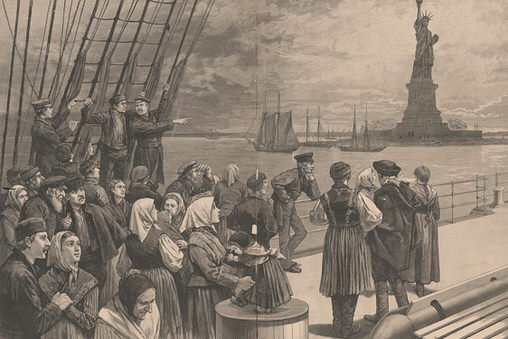
Once at sea, the Atlantic crossing could take anywhere from two weeks (steamships) to six or eight weeks (sailing ships).
8. Tracing This Journey in Your Own Family
Understanding how emigrants reached the port can help genealogists identify new sources. A family traveling down the Rhine might appear in river passenger registers, while those passing through major cities might show up in temporary residence records.
Studying historical transport routes can also explain why emigrants from the same village often departed through the same port or shipping line.
Discover Your Family’s Migration Story
The journey from a small German parish to a transatlantic port was often the first step in a life-changing adventure. By tracing travel routes, emigration permits, and passenger lists, you can reconstruct the path your ancestors took toward their new life overseas.
At My German Origin, I specialize in uncovering these migration stories using archives, church records, and emigration documents across Germany.
Request a free feasibility check to find out what records exist for your family.